
How to Streamline Business Travel Processes: A Strategic 2026 Checklist
Updated: Aug 30
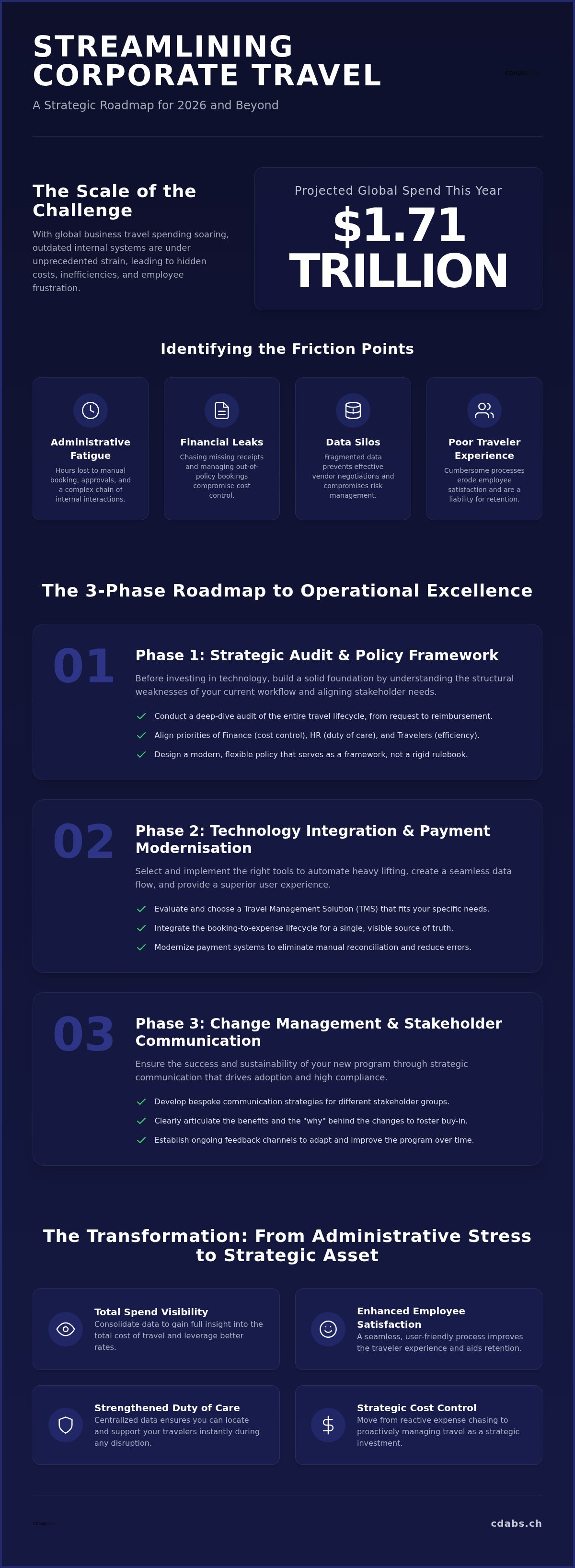
With global business travel spending projected to reach a staggering $1.71 trillion this year, the pressure on your internal systems has never been higher. You've likely felt the strain of overwhelming admin hours lost to manual booking and the frustration of chasing down expense receipts that never seem to surface. It's a common challenge to see traveler compliance slip when policies feel outdated or cumbersome. To truly streamline business travel processes, you need more than just a new software tool; you need a cohesive strategy that balances operational control with the human experience of the traveler.
Managing these complex transitions requires a steady hand and a clear roadmap. This article provides a comprehensive framework to audit your current state, automate the heavy lifting, and optimize every stage of the travel lifecycle. We'll explore a strategic checklist designed for 2026 that addresses total spend visibility and employee satisfaction. By the end, you'll have the insights needed to transform your travel program into a source of organizational health rather than a source of administrative stress.
Table of Contents
Identifying the Friction Points in Modern Corporate Travel
Growth is often a quiet catalyst for operational chaos. While business expansion signals success, it frequently outpaces the infrastructure designed to support it. Many organizations discover that the manual methods once used to manage local trips have become a significant drag on productivity as the scope of their travel increases. When you begin to streamline business travel processes, the first step is not selecting a new software tool; it is identifying exactly where the current friction lives. This friction manifests as administrative fatigue, hidden financial leaks, and a lack of clarity that prevents strategic decision-making.
If your team feels that booking a flight is more taxing than the meeting itself, you have reached a breaking point. High friction doesn't just waste time; it erodes employee satisfaction. In an era where the traveler's experience is directly linked to retention, a cumbersome booking process is a liability. In specific regions like Salento, utilizing professional ground transport services such as NCC Bardi can alleviate this burden, ensuring a smoother journey. Recognizing these signs early allows you to transition from reactive firefighting to proactive management.
The Cost of Administrative Inertia
Manual travel booking is rarely just about the time spent on a website. It involves a complex chain of internal interactions, from preliminary email requests to the final, often painful, expense reconciliation. If your finance team spends several days every month manually checking digital receipts against credit card statements, you are facing the high cost of administrative inertia. This inefficiency often leads to "leakage," where employees book outside of official channels because the internal process is too slow or restrictive. Leakage is more than a compliance issue; it is a symptom of a broken process that compromises your duty of care. Without a centralized system, identifying where your people are during a global disruption becomes a manual, high-stakes race against time.
Data Silos and Missed Opportunities
Modern corporate travel management relies entirely on the quality and accessibility of your data. When booking information lives in a spreadsheet and expenses reside in a separate accounting tool, you lose sight of the total cost of ownership. These data silos make it impossible to negotiate effectively with airlines or hotel groups. You simply lack the consolidated volume data required to leverage better rates. Additionally, fragmented data creates significant gaps in risk management and traveler security. To truly streamline business travel processes, you must integrate these disparate data points into a single, visible lifecycle. Only then can you move from guessing your travel spend to strategically controlling it, ensuring every trip delivers maximum value to the organization.
Phase 1: The Strategic Audit and Policy Framework
Many organizations rush to purchase a new Travel Management Company (TMC) platform before they understand why their current one is failing. To successfully streamline business travel processes, you must first strip back the layers of your existing workflow to reveal the structural weaknesses. This strategic audit ensures that any technological investment you make later is built on a solid foundation rather than simply digitizing an inefficient habit.
Mapping stakeholders is a vital component of this phase. Finance requires granular reporting and strict cost control to manage the bottom line. HR focuses on duty of care and employee retention, ensuring that travel doesn't lead to burnout. Travelers simply want to get from point A to point B without a logistical headache. Aligning these diverse needs with your organization's global growth and ESG (Environmental, Social, and Governance) goals ensures the resulting policy is sustainable and future-proof.
Conducting a Process Deep-Dive
To fix a process, you have to live it. Interview your most frequent travelers to uncover the real-world obstacles they face, from slow approval chains to confusing reimbursement rules. According to the latest research from the Global Business Travel Association, technology integration remains a top hurdle for successful programs. A comprehensive process audit acts as the definitive foundation for any successful digital transformation. Auditing the current payment lifecycle reveals where manual intervention is causing delays or errors that frustrate both employees and the finance department.
Designing a Policy That Actually Works
A modern policy shouldn't be a rigid rulebook; it should be a flexible framework. It must balance corporate cost control with the flexibility employees expect in 2026. This includes clear guidelines on "green travel" to meet carbon reduction targets without compromising traveler comfort. When you streamline business travel processes, you create a system that supports both the traveler and the CFO. For a deeper look at how to align these elements, consult our Strategic Business Travel Consulting: 2026 Guide. Crafting a policy that people actually want to follow reduces "leakage" and improves data accuracy across the board. If you're looking for an unbiased perspective on your current workflows, independent consulting support can help identify the gaps you might have missed.
Phase 2: Technology Integration and Payment Modernisation
Technology serves as the bridge between your strategic policy and the traveler's daily reality. Selecting a platform is a high-stakes decision that requires more than a simple feature-list comparison. It demands a deep understanding of how data flows through your organization. To truly streamline business travel processes, you must integrate your booking tools with your accounting and risk management systems. This creates a closed-loop ecosystem where every transaction is visible, secure, and compliant with global standards like GDPR.
Implementing a unified technology stack removes the guesswork from travel management. When systems talk to each other, you eliminate the need for manual data entry and the errors that inevitably follow. This phase isn't just about moving bookings online; it's about building a digital infrastructure that supports growth while protecting your bottom line.
Choosing Your Technology Stack
Deciding between a full-service Travel Management Company (TMC) and a standalone Online Booking Tool (OBT) depends on your organizational complexity. Full-service TMCs provide high-touch support for complex global itineraries, while agile OBTs might better suit SMEs looking for speed and lower fees. Mobile technology is no longer an "extra" feature; it's the primary interface for your travelers. If your stack doesn't offer a seamless mobile experience, compliance will suffer. Our Digital Transformation for Business Travel: The 2026 Strategic Roadmap details how to select vendors that prioritize user experience without sacrificing robust backend control.
Streamlining Payment and Reconciliation
The most significant delays in travel management often occur after the trip ends. Traditional reimbursement models are slow and frequently frustrate employees who don't want to carry business debt on personal cards. Modernizing your payment architecture through virtual cards and central billing changes this dynamic. Virtual cards provide a unique, single-use number for every transaction, which drastically reduces the risk of fraud while simplifying reconciliation. These solutions allow you to set granular spending limits and merchant category restrictions in real time.
Using central billing allows you to consolidate expenses into a single, clean invoice. This gives your finance team 100% visibility into travel spend without chasing individual employees for paper receipts. When you streamline business travel processes at the payment level, you remove the administrative burden from your travelers and your accountants simultaneously. Automated data capture ensures that every dollar spent is categorized correctly. This provides the high-quality data needed for the strategic supplier negotiations we identified as a priority in the audit phase.
Phase 3: Change Management and Stakeholder Communication
Even the most sophisticated travel management solution will fail if the people using it don't understand its value or feel neglected during the transition. Change management is the primary predictor of process success; it is the human element that determines whether your efforts to streamline business travel processes will yield a return on investment. Without a clear communication strategy, new systems are often met with resistance or bypasses that lead back to the very "leakage" you aimed to eliminate.
To ensure high adoption, you must develop bespoke communication packages tailored to different user groups. Finance needs to hear about data integrity and cost control, while travelers need to know how the new system will save them time and reduce administrative headaches. This isn't a one-time announcement but an ongoing dialogue that begins long before the software goes live. Monitoring success through KPIs and traveler feedback loops allows you to identify friction points in real time and address them before they become ingrained habits.
Building the Case for Change
Middle management acts as the primary conduit for any cultural shift within an organization. Engaging these leaders early allows them to champion the new travel processes within their own teams. You must address common objections head-on, particularly concerns regarding traveler flexibility and data privacy. When employees understand that a streamlined process actually empowers them rather than restricts them, resistance fades. For a deeper dive into these methodologies, explore our Strategic Change Management for Corporate Travel: A 2026 Framework. Clear, transparent communication ensures that everyone understands the "why" behind the change, not just the "how."
Implementation and Continuous Improvement
The choice between a "Big Bang" implementation and a phased rollout depends on your organizational culture and the complexity of your global footprint. Phased rollouts often provide a safer environment to refine the process based on live feedback from a smaller pilot group. Change management serves as the vital bridge between the deployment of new technology and its successful adoption by the workforce. Once the system is live, the work isn't over. You must create a structured feedback loop to gather insights from travelers and administrators alike. This continuous improvement cycle ensures the process remains agile as your business grows. If you need support in crafting these vital messages, our Change Management Communications Packages provide the expert framework needed to secure stakeholder buy-in at every level.
Implementing Your Roadmap for Operational Excellence
The transition from fragmented spreadsheets to a unified, automated travel program is a significant organizational milestone. By following the strategic framework laid out in the previous phases, you move away from the hidden costs of manual booking and toward a state of operational excellence. To truly streamline business travel processes, you must maintain the momentum of your audit and technology integration. This is where many organizations realize that while a Travel Management Company (TMC) provides the platform, an independent consultant provides the unbiased oversight needed to ensure that platform actually serves the business.
Unlike agency-based models that may have inherent biases toward specific suppliers or internal booking tools, an independent consultant acts as a strategic architect. They ensure that every component of your travel lifecycle, from payment solutions to change management, is optimized for your specific organizational health. This steady, professional perspective is essential when navigating a vendor landscape that is often opaque and complex.
The CDABS Approach to Travel Excellence
With over 30 years of industry experience, CDABS provides the seasoned authority required to navigate complex global transitions. Dominic Short functions as both a strategic advisor and a hands-on facilitator, ensuring that the unique needs of SMEs, NGOs, and global corporates are met with precision. Whether you're looking for process analysis or a full digital transformation, the approach is always bespoke. By leveraging a deep understanding of business cycles and over 500 successfully delivered events worldwide, CDABS offers a steady hand to help you streamline business travel processes without the fragmented results of a DIY approach. You can contact Dominic Short directly for a preliminary process analysis to identify the immediate gaps in your current travel program.
Your Next Steps Toward Efficiency
Transformation doesn't have to happen overnight. Prioritizing quick wins, such as implementing virtual card solutions or updating a single approval workflow, can build the internal confidence needed for a full-scale rollout. Establishing a clear timeline for your digital transformation ensures that the project remains methodical and thorough. Before you begin, consider this final readiness checklist:
Have you identified all stakeholders across Finance, HR, and Operations?
Is your data currently consolidated enough to provide total spend visibility?
Do you have a bespoke communication plan ready for your travelers?
Are your payment systems integrated with your expense reconciliation tools?
If you're ready to move from administrative chaos to strategic control, streamline your business travel processes with CDABS today. The path to efficiency is a well-defined process, and having a reliable partner makes all the difference in achieving long-term success.
Achieving Long-Term Operational Excellence in Corporate Travel
The journey to modernize your travel program is a methodical progression from identifying friction to implementing a stable, automated lifecycle. You've seen that success isn't just about selecting a tool; it's about conducting a strategic audit that aligns the needs of Finance, HR, and your travelers. By integrating modern payment solutions and robust change management, you can finally streamline business travel processes and eliminate the administrative inertia that drains your resources. These steps ensure your program is built on a foundation of data integrity and organizational health.
Managing these complex transitions requires a steady hand and an unbiased perspective. With 30+ years of industry experience, CDABS offers the independent consulting expertise needed to navigate the TMC landscape without any conflict of interest. From deep process analysis to bespoke change management communications, we help you build a travel program that supports your global growth. It's time to transform your travel operations into a source of efficiency and employee satisfaction. Optimise your corporate travel strategy with CDABS and take the first step toward a more controlled, visible, and productive future.
Frequently Asked Questions
How can I streamline my business travel booking process effectively?
Effective streamlining begins with centralizing all booking channels into a single, integrated platform. You can streamline business travel processes by implementing an Online Booking Tool (OBT) that automatically enforces policy at the point of purchase. This reduces the need for manual approvals and prevents "leakage" to consumer sites. Integrating this tool with your HR data ensures that traveler profiles are always accurate, which significantly reduces administrative friction during the reservation stage.
What is the ROI of adopting travel management software for SMEs?
The ROI for SMEs is found in both direct cost savings and recovered administrative time. By consolidating travel volume through a managed system, SMEs can often access negotiated corporate rates that provide meaningful discounts compared to public retail prices. Additionally, automating expense reconciliation can save finance teams several days of manual work each month. This allows your staff to focus on high-value strategic tasks rather than chasing missing receipts or correcting manual entry errors.
How can companies balance employee flexibility with corporate budget control?
Achieving this balance requires a shift from rigid restrictions to guided choices. You can implement a "visual guilt" or "nudge" system within your booking platform, which shows travelers the financial impact of their choices in real time. Providing a curated selection of preferred hotels gives employees flexibility while ensuring all options remain within pre-approved budget caps. This approach fosters a culture of responsibility rather than one of strict, top-down enforcement that often leads to non-compliance.
Why is change management essential for corporate travel transformation?
Change management is essential because technology alone cannot fix a broken organizational culture. Without a structured plan to communicate the benefits of new processes, employees often revert to familiar, manual habits that compromise data integrity. A successful transformation relies on bespoke communication packages that address the specific concerns of travelers and managers. This bridge between the new digital infrastructure and daily user habits is what ensures long-term adoption and the realization of your strategic travel objectives.
What are the biggest challenges when optimizing international travel logistics?
The primary challenges include managing complex duty of care requirements and navigating diverse tax regulations like VAT reclamation. Optimizing these logistics requires real-time tracking of traveler locations to ensure safety during global disruptions. Additionally, ensuring that your travel technology can handle multiple currencies and local language support is vital for maintaining a consistent process across different regions. Fragmented data in international markets often leads to significant gaps in total spend visibility and weakens your negotiating position. Furthermore, when travel is tied to overseas production, maintaining high standards is critical; The Inspection Company offers a guide on product inspection processes to ensure that your international operations remain as efficient as your travel program.
Automation significantly improves the employee experience by removing the burden of manual expense reporting. When you streamline business travel processes through automated data capture, travelers no longer need to manually input receipt details or wait weeks for reimbursements. Features like mobile itinerary updates and automatic flight disruption alerts provide a sense of security and support. This allows employees to focus entirely on their professional objectives rather than the logistics of the trip itself, reducing burnout.
What is the difference between a travel management company and a travel consultant?
A Travel Management Company (TMC) is a service provider that offers the booking platform and agency support for reservations. In contrast, an independent travel consultant acts as a strategic architect who audits your existing workflows and helps you select the right TMC. Consultants provide unbiased oversight, ensuring that the selected technology and contracts are optimized for your specific business needs rather than the agency's commission structures or preferred supplier agreements. They provide a steady hand during complex transitions.
Can an NGO benefit from corporate travel process optimization?
NGOs benefit immensely from process optimization, particularly regarding transparency and donor compliance. Many NGOs operate on restricted grants that require meticulous tracking of travel expenses and justification for every trip. A streamlined process provides the granular data needed to satisfy these audit requirements while reducing the administrative overhead that often eats into program budgets. It also ensures that duty of care is maintained for staff working in high-risk or remote environments, which is a critical priority for NGOs.


Comments